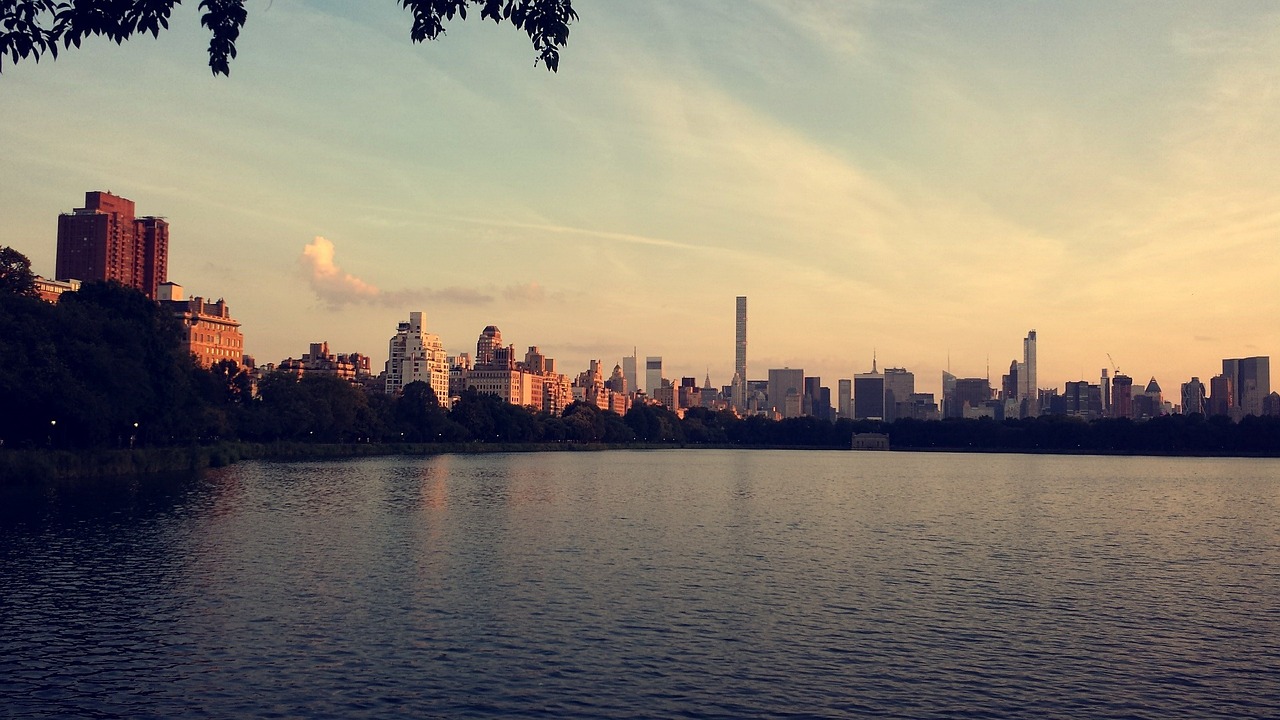
Central Park
The city's best idea, free since 1858
⏱ 2-4 hours👤 All ages$
Get Tickets
Get Central Park Tickets
Skip the line · mobile tickets accepted at the door
The design story deepens every lawn: Olmsted and Vaux won the 1858 competition with the Greensward Plan — a manufactured pastoral (swamps drained, four million trees planted, Manhattan schist blasted and rearranged) built by 20,000 workers, with the stroke of genius being the sunken transverse roads that let crosstown traffic pass invisibly below the scenery, and the social thesis (a democratic landscape where all classes met — radical then, proven since) that made it the template for every city park after. The architectural program is Vaux and Mould's: Bethesda Terrace's carvings (seasons, times of day — read the balustrades), the 36 bridges and arches each unique (Bow Bridge's cast-iron curve the celebrity), and Belvedere's folly-castle built as a Victorian viewing platform and weather station (it still reports the city's official Central Park temperature).
Seasonal craft: spring's cherry weeks (the Reservoir's east side and Cherry Hill), summer's Delacorte Shakespeare line-and-picnic ritual and the SummerStage calendar, October's foliage peak (the Mall and the Ramble go full flame — the city's best leaf-peeping needs no train ticket), and winter's Wollman Rink skating under the skyline. The north end (above the Reservoir) is the connoisseur's half: the Conservatory Garden's formal rooms (the park's quietest beauty, free), the Harlem Meer's banks, and the North Woods' ravine — crowd-free on days the Bethesda crush peaks. Wildlife earns its footnote: the Ramble's 200-plus bird species on the Atlantic flyway, the famous red-tailed hawks, and the raccoon lobby.
Practicals and fit: entrances every few blocks on all sides (the south corners for first-timers; the 72nd Street entrances land at Strawberry Fields and the Terrace fastest), free Conservancy maps at the visitor centers (Dairy, Belvedere, Chess & Checkers), restrooms mapped (know them), bike rentals at the south edge with the full 6.1-mile loop car-free, and the park's safety being ordinary city-smart (populated paths after dark; the park closes at 1am). Fit: everyone, every trip — families (Heckscher's playground empire, the carousel, the zoo's compact charm), couples (rowboats, Bow Bridge, the Terrace at golden hour), runners (the Reservoir ring), and any itinerary that needs its lungs back between museums.
What to Expect
Format
A free, fully designed 843-acre landscape — the Mall's elm nave to Bethesda Terrace, the Lake's rowboats, the Ramble's woods, Belvedere's turret — walked as a south-end loop or ranged for days.
Best Time
Golden hour at Bethesda always; October for peak foliage; summer mornings before the carriage crush; the north end when crowds peak south.
Duration
Two to three hours for the classic loop; the park absorbs whole days.
Tips
Read the Terrace balustrades — every carving is a season or hour. The Conservatory Garden up north is the quietest beauty in Manhattan, free. Bikes beat carriages on value; the loop is car-free.
⚡ Quick Picks
Best For
Every first trip's first morning — the city's best idea, and the lungs between museums.
Families
The carousel, Heckscher's playgrounds, the zoo, and rowboats — a full day without leaving the green.
Couples
Rowboat on the Lake, Bow Bridge crossing, Bethesda at golden hour — the city's definitive romance loop.
Pair With
The Met on the park's eastern edge; the Natural History Museum on its west — the park connects both.
Time Needed
One classic loop minimum; most trips return daily without planning to.
Ready to book Central Park?
Get Tickets →Frequently Asked Questions
Is it really all designed?
Every acre — Olmsted and Vaux's 1858 Greensward Plan drained swamps, blasted rock, and planted four million trees to manufacture the pastoral. The sunken crosstown roads hiding traffic below the scenery remain the genius stroke.
What is the essential loop?
Grand Army Plaza up the Mall's elms to Bethesda Terrace, then rowboats or Bow Bridge into the Ramble, exiting via Strawberry Fields — two to three unhurried hours covering the park's heart.
Are the rowboats worth it?
The Lake's hour is the classic New York date — rentals at the Loeb Boathouse in season, first-come, with Bow Bridge posing for every photo.
Is it safe?
Ordinary city-smart rules on populated paths; the park closes at 1am and mornings-to-evening run thoroughly peopled. The north end is quieter, not dicier — and its Conservatory Garden is the secret masterpiece.
How do we see Shakespeare in the Park?
Free summer performances at the Delacorte — the famous same-day line (or digital lottery) is the ritual; picnicking the wait is half the experience.
More New York City Attractions
Browse all →
The Metropolitan Museum of Art
One of the world's great encyclopedic museums — Egyptian, Greek, Roman, European masters, American wing, modern art, Asian art, Islamic art, costume institute, all under one roof on Fifth Avenue.

American Museum of Natural History
The 28-building complex on the Upper West Side with dinosaur halls, the Rose Center planetarium, the blue whale, and the new Gilder Center — one of NYC's great family museums and a classic since 1869.

Top of the Rock
The 70th-floor observation deck at Rockefeller Center — the only place to see the Empire State Building IN your skyline photo. Three levels of open-air viewing.